Hindutva Terrorism in India
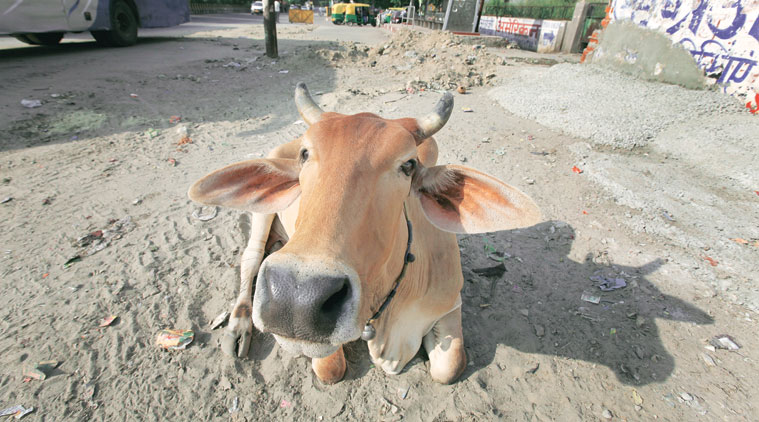
In the name of protecting cows, members of extremist outfits affiliated to India’s ruling Hindu nationalist Bharatiya Janata Party (BJP) are attacking Muslims.
- On June 29, a mob beat up and killed Asgar Ansari, a 45-year-old Muslim trader in the eastern state of Jharkhand, for allegedly carrying beef in his car. Three days earlier, a Muslim dairy owner, Usman Ansari, was beaten up and his house set on fire; a cow carcass was reportedly found near his house.
- In September 2015 a Muslim man from a village near Delhi was lynched after being accused of storing beef in his freezer.
- The past seven years have seen a total of 63 cases of violence triggered by 'cow protection', of which 20 happened in the first six months of 2017.
- What is more disturbing in these numbers is that out of the 28, deaths 24 were Muslims, which is a whooping 86 percent of the total fatalities
- As many of 97% of these attacks were reported after Prime Minister Narendra Modi’s government came to power in May 2014, and about half the cow-related violence – 32 of 63 cases – were reported from states governed by the Bharatiya Janata Party (BJP) 8 were run by the Congress, and the rest by other parties.
- No more than 21% (13 of 63) of the cases were reported from southern or eastern states (including Bengal and Odisha), but almost half (six of 13) were from Karnataka. The only incident reported in the northeast was the murder of two men in Assam on 30 April, 2017.
- State-wise, the most number of attacks were reported from Uttar Pradesh (10), Haryana (9), Gujarat (6), Karnataka (6), Madhya Pradesh (4), Delhi (4) and Rajasthan (4). 19 out of the 29 states have reported at least one incident of cow related violence.
- In 23 attacks, the attackers were mobs or groups of people who belonged to Hindu groups, such as the Vishwa Hindu Parishad, Bajrang Dal and local Gau Rakshak groups. In 5% of the attacks, there was no report of attackers being arrested. In 13 attacks (21%), the police registered cases against the victims/survivors.
- According to the data released by IndiaSpend, 28 people were killed and 124 others were injured in these attacks by the so called 'gau rakshaks'
- The two incidents are the latest in a string of attacks carried out by activists belonging to outfits like the Bharatiya Gau Raksha Dal (BGRD) and its regional units as well as organizations like the Bajrang Dal and the Vishva Hindu Parishad (VHP) that are part of the Sangh Parivar, a family of Hindu right-wing organizations of which the BJP is a part.
The attacks, which are illegal and being described as cow vigilantism, have surged in recent years.
However, 2017 seems poised to break this record as around 20 cow vigilante attacks have been reported in the first six months this year, with the violence showing no signs of abating.
Targeting Muslims
The cow vigilantes claim they are “gau rakshaks” (protectors of cows). According to the BGRD’s website, caring for abandoned cattle and orphaned calves by providing them food, medical care, and shelter is the organization’s main objective.

In addition, “we focus on preventing cow slaughter too and hence act to shut down the beef trade,” Bobby Singh, a BGRD activist from Haryana, told The Diplomat.
However, protecting cows is not a priority of the cow vigilantes, critics point out, drawing attention to the fact that the groups do little work to prevent ill-treatment of cows roaming India’s streets, for instance. Rather, their main activity appears to be tracking and trapping people transporting cattle and unleashing horrific violence on them.
Many Hindus consider the cow to be sacred, oppose cow slaughter, and do not eat beef. However, Muslims and Christians as well as a section of Hindus are beef-eaters. The beef business in India is dominated by Muslims, and those who skin cows and work with leather are largely Muslims and Dalits.
The beef issue thus comes in handy to target Muslims.

Although Dalits have been targeted occasionally by the cow vigilantes, Muslims have borne the brunt of their attacks. Of the 28 people killed in such attacks so far, 86 percent were Muslim.
The violence, then, seems designed to terrorize Muslims, damaging their livelihood and way of life. The ultimate objective of the cow vigilantism is achieving the goal of the Sangh Parivar: homogenizing pluralistic India and making it a Hindu state.
The Cow as a Nationalist Symbol
It was in the late 19th century that the cow emerged as an important rallying point for mass political mobilization in India. Hindu nationalists sought to unite Hindus against British colonial rule and subsequently, against Muslims amidst the growing Hindu-Muslim communalism in the early 20th century.

The cow has since become a potent symbol of Hindutva, a Hindu supremacist ideology espoused by the Sangh Parivar. Hindutva proponents view India as a Hindu nation, define Indian culture in terms of Hindu values, and seek to establish the hegemony of Hindus and the Hindu way of life.
In recent years, the Sangh Parivar has accelerated efforts to promote its Hindutva agenda and is pushing the cow slaughter issue to the political center-stage. “Cow protection,” the imposition of upper-caste Hindu food habits on Muslims and others, calls for a beef ban. The current wave of cow vigilantism must be seen in this context.
Hindutva Terror
Hindutva terrorism is not new to India. Hindutva activists have carried out several massacres of Muslims, as in Mumbai (then Bombay) in 1992 and Gujarat in 2002, and set off bombs in neighborhoods and towns that are predominantly Muslim, even in their places of worship.
Yet these attacks have not been described as acts of terrorism. They are part of a world-wide trend wherein majoritarian terror against minorities is not termed terrorism and consequently not dealt with sternly by the state.
Indeed, given the links between cow vigilantes and the ruling BJP, rarely has action been taken against the perpetrators of violence, especially in BJP-ruled states. Often, it is the victims of the vigilantes who are punished.
In BJP-ruled states, existing laws banning cow slaughter have been amended to expand the scope of such bans and to increase punishments for violation. Gujarat, for instance, amended its animal protection law this year to make cow slaughter punishable with life imprisonment. Other BJP chief ministers have endorsed hanging those who slaughter cows and have even exhorted vigilantes to do more and not stop at sloganeering. Little action is being taken to rein in the vigilantes or punish them. Emboldened by such state support, violence targeting Muslims is being unleashed in the name of protecting the cow.

India’s reluctance to take stern action against the BGRD’s unleashing of violence against Muslims will deepen communal divisions in the country. Its failure to bring to justice those who orchestrated and unleashed horrific violence on Muslims in the Bombay and Gujarat “riots” of 1992 and 2002, respectively cost it dearly. These incidents prompted hundreds of Muslim youths to take up arms against the Indian state.
If the ongoing violence against Muslims in the name of protecting the cow persists and goes unpunished, another generation of angry and alienated Muslim youth will turn to militancy and terrorism again.
Comments
Post a Comment